System
Stranger Than Heaven Combat
Stranger Than Heaven combat is a new engine of violence built so Makoto Daito’s body can argue with itself. Ryu Ga Gotoku Studio left the turn-based RPG layer of recent Like a Dragon titles behind and did not simply reboot the old Heat brawler either. You drive the left half and the right half on separate bumper-and-trigger pairs, then spend weapons, tackles, and context finishers as punctuation. This overview is the systems page. The literacy layer is combat basics. The button chart is controls. The steel is weapons.
Why the studio threw out the comfortable brawler
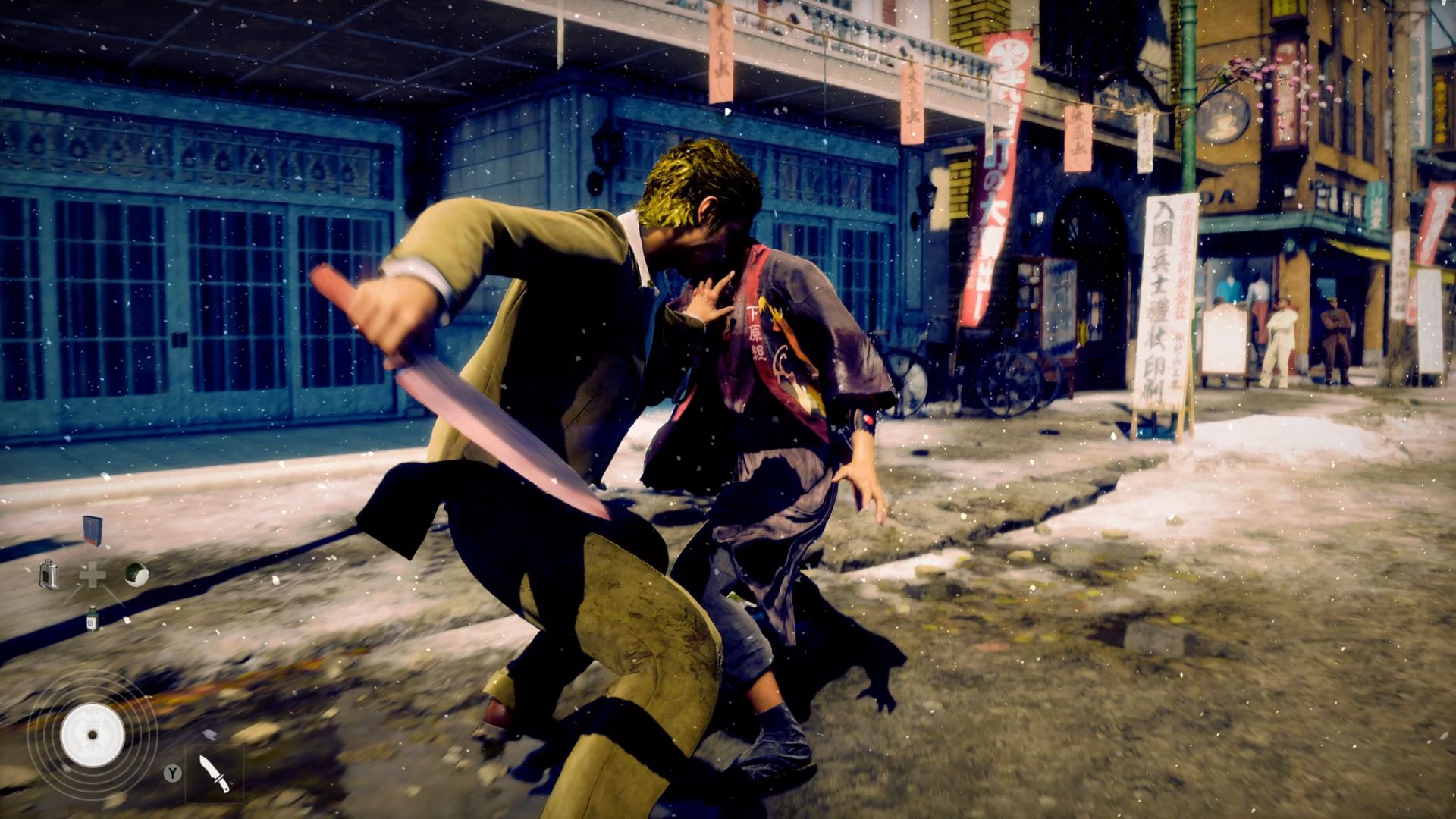
Sakamoto framed the system as the title’s headline mechanic. Yokoyama has already warned that not everyone will like it. Hands-on language from Summer Game Fest clusters around three words: slower, heavier, readable. IGN reached for “Yakuza, like a Souls game.” Shacknews walked out of a private demo with a floor of unconscious men and a grin. Those are not contradictions. A system can feel great after you stop mashing. The public argument is whether players will give it that long.
Design intent is written on the screen. Large windups, visible recoveries, the ability to hold a button until a runner enters range, the ability to parry the idea of a grab by simply using the other arm. If you came from Kiwami 2’s snap, this will feel like moving through wet air. If you came from Infinite Wealth’s menus, this will feel like someone stole your party. Both reactions are documented in trailer comments. This wiki is not going to pretend the system is a crowd pleaser. It is going to explain it until you can choose.
The verbs, in the order you will fail them
Tap strikes. Charged releases. One-sided blocks. Cross counters. LT+RT tackles. Dual-trigger ground pounds. Weapon specials. Environmental finishers. A car interior that turns personal space into a horror closet. That list is the curriculum. The survive guide is the street exam. You will fail the grab-break first, then the greedy double-charge, then the ground pound in a crowd. Each failure is a sided mistake. That is the elegance: the autopsy always names a limb.
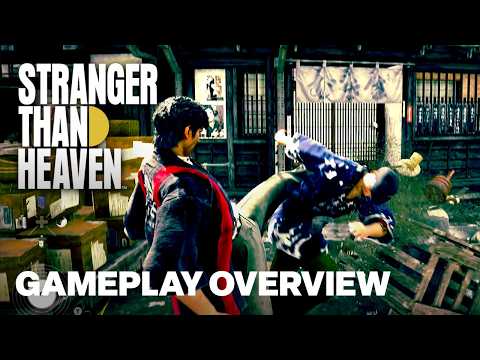
GameSpot’s overview chapters match what the official trailer teaches: intro, new system, combos, tackles, weapons, unique scenarios. Watch that embed in the middle of this page as a table of contents with fists. Then jump to controls and say the mapping until it is boring. Boredom is fluency.
Weapons are load-bearing, not dressing
SEGA’s own pitch talks about knives, hammers, katanas, and era inventions, plus upgrade trees and passive abilities. Deluxe sells four extra weapons. Preorders sell Dosu: Kagekiri. Commenters under the July combat trailer celebrated that “weapons are no longer cosmetic,” a burn aimed at some prior RGG entries. Whether every screwdriver will feel distinct is a launch-week question. The system at least wants them distinct. Hold a weapon in one hand and you still own the other. That sentence is the difference between a stance game and a handed game. Stranger Than Heaven is handed.
Cinematic injection — the moving-car fight, the environmental kill — is how RGG still does spectacle without a Heat gauge flash. Take the prompt when it appears. Do not farm it. Survival players who ignore the prompt to look stylish will eat a pipe. Spectacle players who only look for prompts will lose the sided fight in between. The game is asking for both moods, the same way the campaign asks you to be a killer and a showman. See how to play for that dual job.
How combat changes across the fifty years
The demo sliced 1915, 1929, 1943 and withheld 1951 and 1965. The Gamescom 2026 playthrough is the same three years, now as a twelve-minute official tape with a Kokura street stroll, a long Kure boss, and rainy Osaka. Expect the toolset to travel with Makoto while the scenery, fashions, and factions change the reason for the bruise. Kure’s yakuza families are not Kokura’s foundry drunks. Osaka’s wartime glitter hides mafia pressure. A later Shinjuku night should feel denser, louder, meaner. We will not invent enemy lists. We will say this: if the limbs stay the same and the cities change, mastery transfers and context does not. The cities hub is the context bible. The Gamescom page is the tape.
Siliconera’s Gamescom notes add a guard as hold B together with LB or RB — one side covering, the other still a person. Treat that as current overlay until a pause menu overrules it. For a live look at someone failing in public, SEGA’s hands-on stream still sits on hands-on. Deluxe knives are seasoning. The system is the product.
Frequently asked questions
Frequently asked questions
Is there a Heat or Style switcher?
Nothing like Yakuza 0’s style icons has been shown. Expression sits in which limb you spend, whether you charge, and which weapon is in which hand.
Can enemies grab both arms?
Not shown. The marketed fantasy is that a one-arm grab still leaves you lethal. Assume worse situations exist at launch, but play the demo lesson until proven otherwise.
Will PC players get extra input options?
Steam lists full controller support, Xbox pads, PlayStation pads, and Steam Input. Keyboard mapping is not documented. Combat is a pad design.
Keep reading