
Cities
Minami, Osaka 1943
Osaka 1943 is the decade where the two jobs collide in public. Minami is pitched as western Japan’s biggest entertainment district, lit like a promise, braced by a world at war, with yakuza and Italian mafia competing in the wings. Makoto and Yu reunite as partners in show business. The Summer Game Fest combat demo used this year as its hardest arena. This page is the 1943 guide: how to think about glitter as camouflage, how to run a bill when the country is clenched, and how to survive a crowd that has stopped being tutorial.
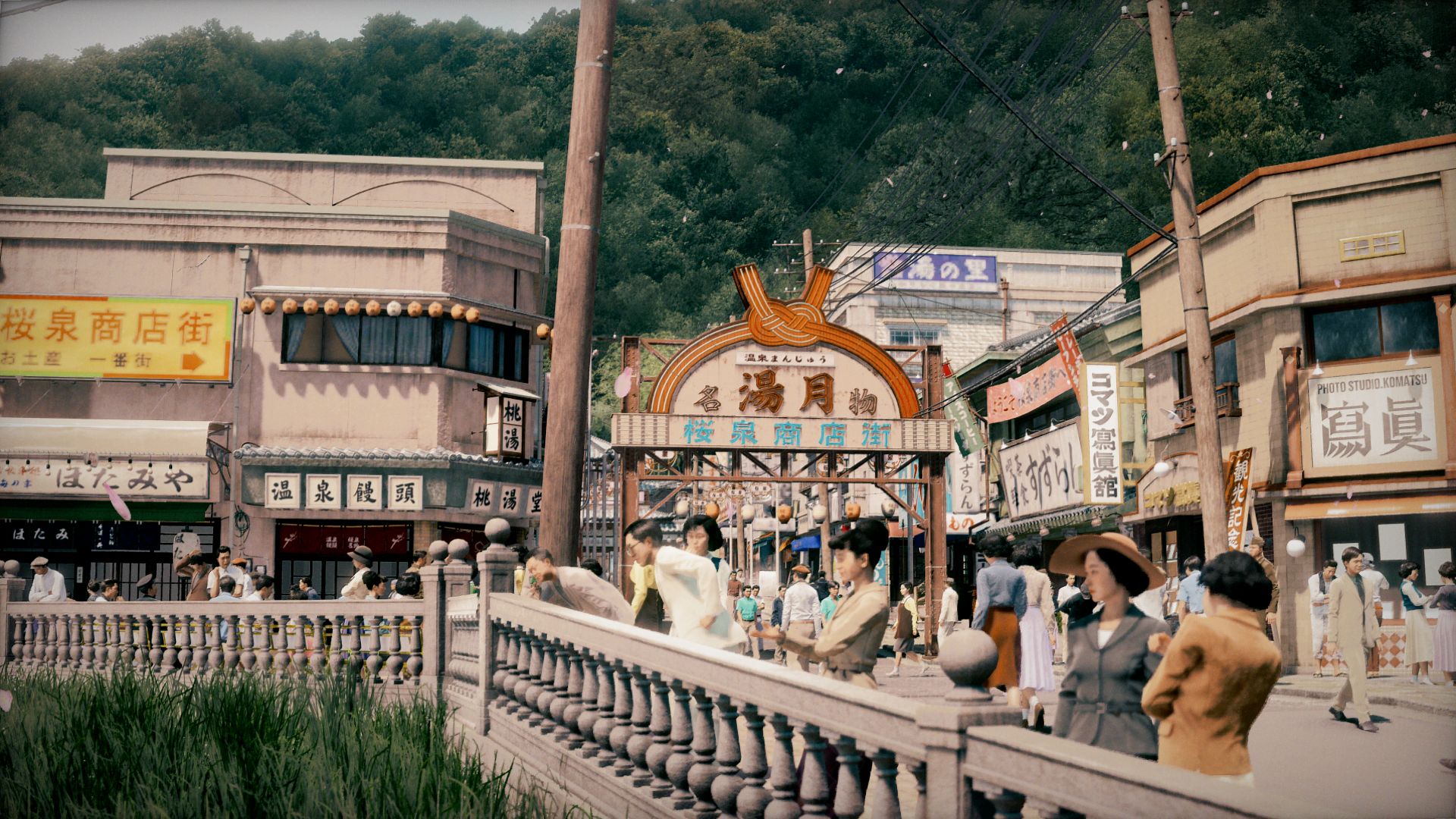
A stage with a foreign shadow
The broadcast’s most useful sentence is that new entertainment thrives on the surface while foreign influence and two crime traditions wrestle underneath. Play the lights as a lie. Your showman loop from how to run shows is no longer a Kokura accident. It is a business with enemies who understand stages as territory. Scouting a singer here is political. Lighting a set is a flag. Yu’s hunger to reshape Japan finally has a venue that looks like culture and acts like a border.
Italian mafia in 1943 Osaka is a RGG swing, not a textbook chapter. Yokoyama has already said real events are omitted unless they bind to Makoto. Do not come here for a Pacific War documentary. Come here for a crime-and-cabaret pressure cooker that uses wartime tension as weather. The story hub keeps the spoiler rails up. This page keeps the district’s job clear: put on a show, do not get absorbed by the wings.
The hardest demo was a warning, not a flex
Hands-on reports stacked 1915, 1929, then 1943 as a difficulty ramp, with a boss-like capstone some players barely survived. If Osaka is where the game first asks whether you actually learned sided combat, believe that. Revisit how to survive and the controls map before you brag in a comment section. Charged haymakers that worked on foundry drunks will bounce off men who have somewhere better to be. Spare a limb. Tackle to make air. Do not mount a body in a circle of suits.
Shooting-gallery activities were mentioned among Osaka pastimes. That is the period toy. Use it as a room, not as the build. Weapons will look more like urban tools and show props than arsenal leftovers. The weapons page still refuses a fake tier list; in this city the honest advice is “short steel and a free hand,” because interiors and crowds will dominate screenshots.
Record the glitter; it will not last
If the sound library cares about era — and Abe said it does — 1943 is the year your archive fills with electric entertainment, crowd roar, and whatever a wartime street uses for a lull. Pocket it. 1951 Atami is salt and postcards. 1965 Shinjuku is another animal. Osaka is the noisy hinge. A composer visit in this decade should feel like mixing a nightclub with a siren. If you hoard tracks and never spend them, you are failing the showman job in the city built for it.
Deluxe’s extra performers and stage items have their best argument here. You do not need them. They are easier to justify when the campaign is literally about a bill. Run the compare tool after you decide whether Osaka’s pitch excites you. If you are a Game Pass brawler who skips songs, skip the twenty dollars too. If you are here for Yu and Makoto’s reunion as producers, the extras are seasoning on the actual meal, which is already in the base game.
Leaving Minami
Atami 1951 will ask for a softer palette and an American singer. Shinjuku 1965 will ask for a secret. Neither is a DLC map; they are later chapters of the same fifty-year ticket. When the game pulls you out of Minami, take the partnership scars and the library. Leave the Italian-mafia weather behind unless the script drags it. The timeline will still remember 1943 if you do not.
Sister pages: Kokura for the soot origin, Kure for the family name, Atami and Shinjuku for the decades the Gamescom tape does not reach. If a later trailer dumps a Minami landmark, it will land in a table on this page, not in a social screenshot with a fake pin. We owe the city that much patience.
Frequently asked questions
Frequently asked questions
Is Minami a real Osaka district?
Yes. Minami is the southern entertainment area around Namba. The game’s version is a play space with wartime crime weather, not a 1943 walking tour.
Why is the Italian mafia in Osaka?
It is a RGG narrative swing presented in the Xbox broadcast as foreign influence under the glitter. It is not a claim about textbook 1943 Osaka.
Is 1943 the showbiz peak?
It is the year the marketing hangs the joint Makoto–Yu production on. Atami continues the music story with Suzy Day.
Keep reading