
Guide
How to Explore Stranger Than Heaven
Combat demos made the limbs famous. Producer Hiroyuki Sakamoto spent Gamescom week reminding the press that the cities are the other half of the bet. Speaking to Inven Global, he said each location’s level-design density is the most detailed RGG has ever created, especially for buildings and shops you can actually enter, and that the volume of exploration content is the largest the studio has produced. Substories are in. Period minigames are in, fewer than a modern Like a Dragon toybox, tuned to each era’s entertainment culture. This guide is how to walk without starving the showman half of the game. Combat literacy stays on combat basics. Maps stay on cities.
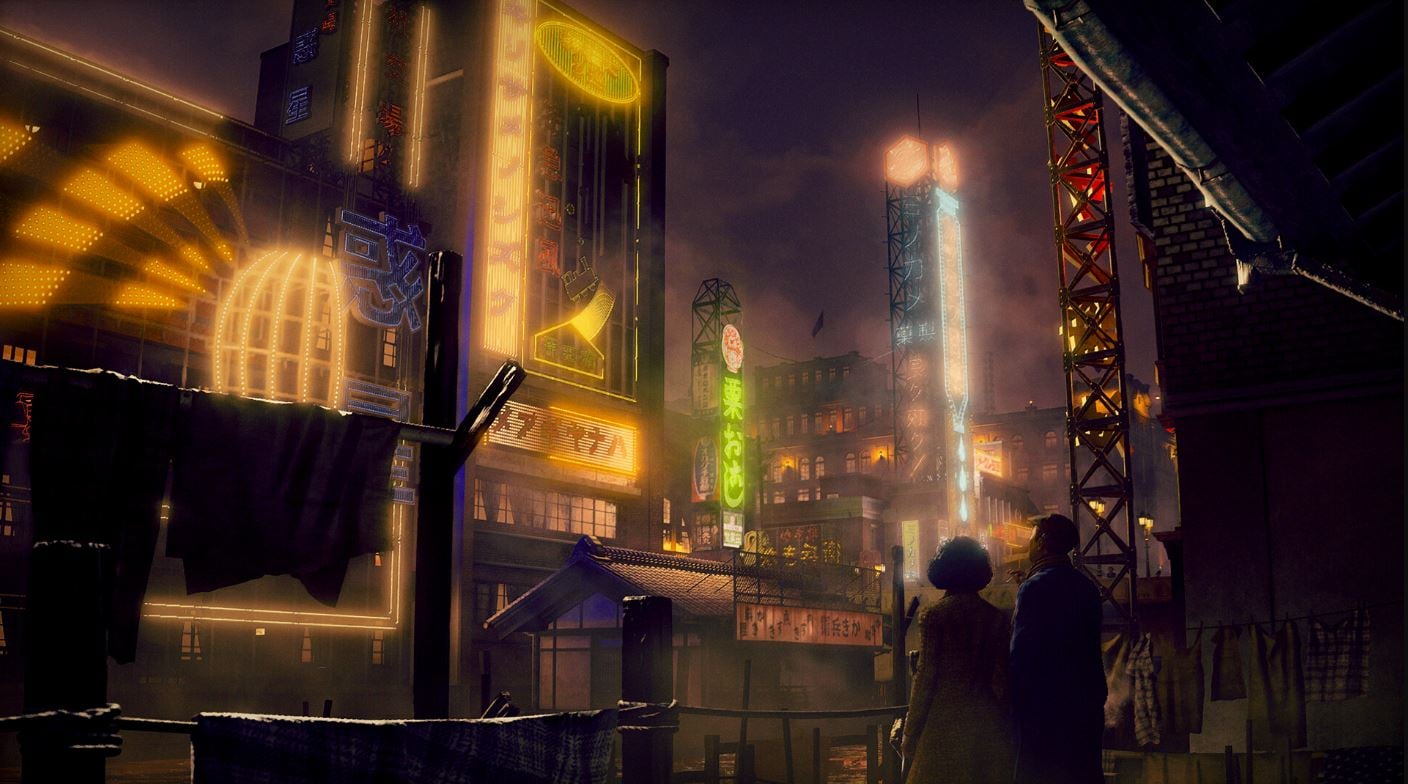
Density is interiors, not a bigger Kamurocho
Yokoyama already said map scale is roughly comparable to series districts. Sakamoto’s new sentence is about doors, not hectares. Expect more enterable rooms and fewer dummy facades. The Gamescom playthrough’s opening minute and a half in 1915 Kokura is the public proof of that intent: walking a street, hearing background chatter, looking at models and shopfronts before the first job. Siliconera clocked that stroll on purpose. Copy it. If you sprint marker to marker you will starve the sound library Abe described — brooms, trains, snores, the thud of a body — and you will starve the rumor trail that feeds scouting.
Five cities still means goodbye to streets. Density does not keep 1915 open in 1965. Learn a neighborhood, then lose it to the decade. The timeline exists so a trailer montage of neon and steam does not merge Atami with Shinjuku. Automaton’s recap also repeated that minigames are brought down a notch because of the historical setting. Believe both: more interiors, fewer UFO catchers.
Substories and toys, without a fake checklist
Sakamoto said substories are “naturally included,” alongside minigames that let you taste authentic entertainment culture from each era. Xbox Presents already named arm-wrestling, dice, and cards in Fukuoka, and target shooting in Osaka. Those are rooms, not the build. RGG has also said substories will feel different from modern Like a Dragon side content, and real historical events appear only when they bind to Makoto. This page will not invent a 1951 pier minigame. When review copies list toys, they go in a table under the matching city: Kokura, Kure, Osaka, Atami, Shinjuku.
Show production is exploration too. Recording a broom in 1915 is how 1965 still has a ghost of foundry weather on the jukebox. Scouting a singer in Osaka is how a rumor becomes a bill. If you treat density as collectibles, you will miss the job. If you treat it as listening, the show guide starts to make sense as a walking habit rather than a menu.
What the demos still fence
Summer Game Fest journalists were dropped into combat arenas. Gamescom’s public demo was still a combat-forward slice with a little street before the bruises. Sakamoto said that footage is the tip of the iceberg. Take him at his word and also do not pretend you have walked Shinjuku. TGS 2026’s playable build is an updated combat demo, not a promise of free roam. PAX West’s booth was the same grammar. Use Gamescom 2026 for the twelve-minute tape. Use TGS 2026 for Makuhari logistics. Use this page for the exploration thesis those booths were not built to prove.
Physical navigation tips remain thin. Ignore a fake alley map on social. Trust SEGA’s adjectives, Sakamoto’s density quote, the tram still, and the five-era trailer on the cities hub. When review copies add landmarks, deep city pages get them first.
A walking session that does not waste January
In a healthy hour: solve one street problem with the sided limbs, save two or three sounds, follow one rumor toward a performer, then either stage a bill or take the bruise the story assigned. When the decade jumps, reset your ear. Kure’s arsenal politics are not Kokura vice. Osaka glitter is not Atami salt. Shinjuku will not give the broom back. Keep the survive guide open because density means witnesses. Keep Deluxe’s extra performers off your conscience until you know whether you even like the walking-and-listening loop. Game Pass includes the doors.
If a site shows you a “100% exploration checklist” before launch, they are role-playing. Come back here for sentences that match public facts. Then go watch the Gamescom street minute and practice not sprinting.
Frequently asked questions
Frequently asked questions
Are substories confirmed?
Yes. Sakamoto said they are included, alongside period minigames. Quality and count are unreviewed.
Are the cities larger than Like a Dragon maps?
Yokoyama said scale is comparable. Sakamoto said density — interiors and shops — is the highest RGG has made.
Can I explore 1915 after reaching 1965?
Not shown. The campaign presents successive eras. Plan to leave streets behind.
Keep reading