Cities
Kure 1929
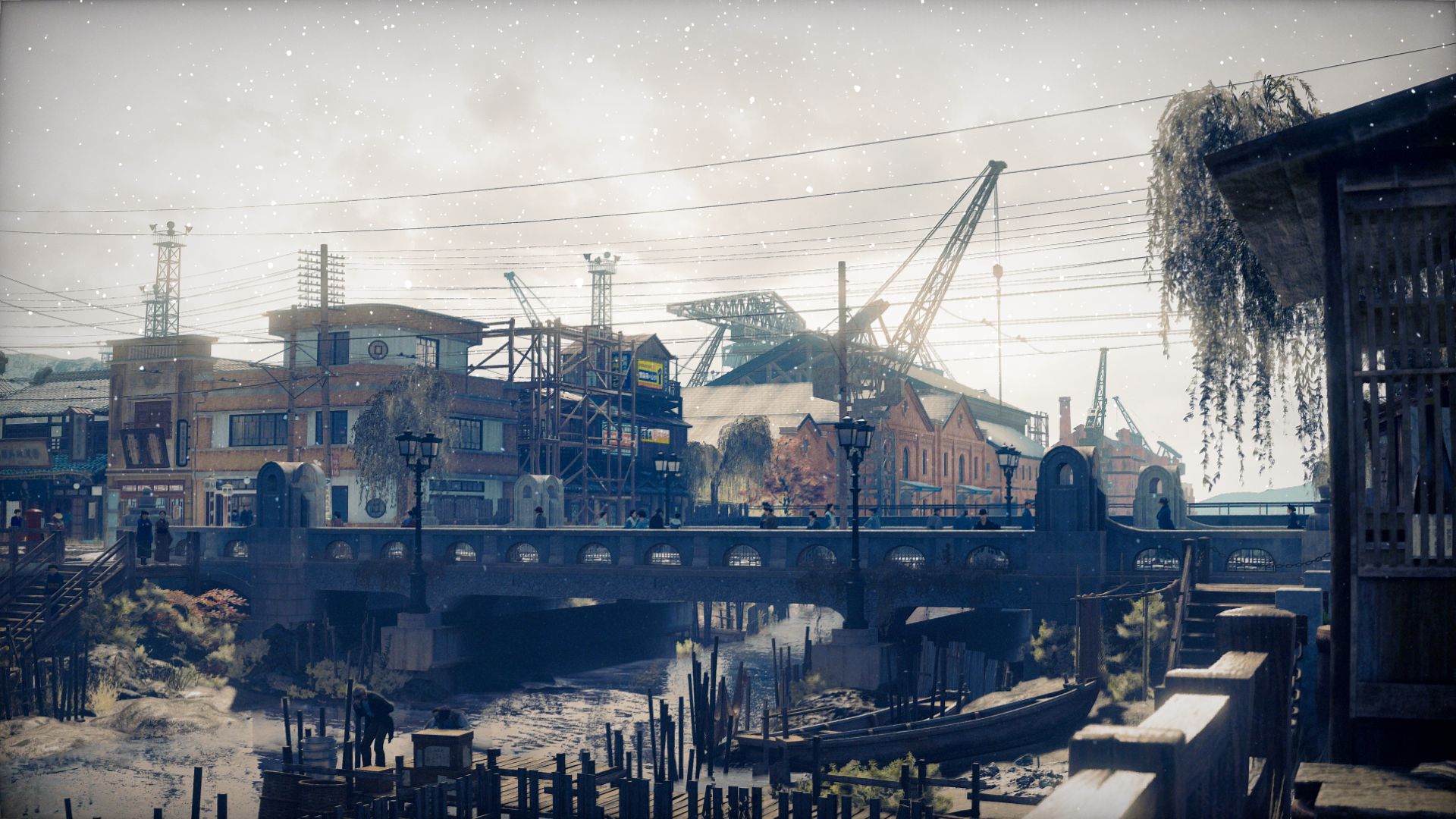
Kure 1929 is the city that turns a stowaway into a name. Official materials describe a port dominated by Japan’s largest naval arsenal, international social traffic, modernizing entertainment, and yakuza organizations thick enough to be weather. Makoto aligns with the Iwaki Family — Hiroshima’s strongest, in the broadcast’s telling — and becomes the Red Oni. This page is the 1929 dossier: what the harbor is for, who is watching your fights, and how a family name changes the sided brawler you learned in Kokura.
An arsenal town is a rumor town
Ships, steel, foreign visitors, and families who treat docks as borders. That mix is why Kure is not Kokura with wetter streets. Work here is national. Crime here is administrative. When you win a brawl, you are not only surviving; you are being evaluated. The Red Oni title is a review score from people who kill for a living. Play the 1929 demo’s middle difficulty with that in mind. Flashy double-charges are a job interview gone wrong. Spare-limb patience is a résumé. Recap the verbs on combat basics if 1915 already taught you arrogance.
Genzo Iwaki, wearing Bunta Sugawara’s likeness, is the gravitational name. Treat him as the face of the family until the game says otherwise. Takashi’s yakuza-music hinge may already be audible here depending on how the decade is sliced; the Xbox show introduced him as someone Makoto meets through those connections. Check the cast list rather than forcing every singer into 1929.
Entertainment is growing up, which means new knives
The pitch says Japanese entertainment is modernizing in this city. That is a showman note and a combat note. Stages mean crowds. Crowds mean pickpockets and men who do not like your face under electric light. Record the new noises. A 1929 harbor is a different library than a 1915 furnace. If you skipped recording in Kokura, Kure is your second chance to take the show loop seriously before Osaka demands a professional bill.
Weapons of an arsenal city should include tools that were never meant for a stage. We will not print a fake smithy list. We will say the weapons page wants you to think in roles: short blade for interiors, heavy for stubborn bodies, empty hand as insurance. Preorder Kagekiri is a dosu, which thematically belongs in a yakuza decade even if you first equipped it in 1915. Use it if you have it. Do not think it completes Kure. The city is the family, not the steel.
Yu is probably not your roommate anymore
The Fukuoka split is the wound you carry into this port. Makoto wanted to live. Yu wanted to rewrite Japan. Kure’s family ladder looks like a place where those two sentences become incompatible in public. If the story parks Yu off-screen here, feel the absence. If it throws him back early, feel the argument. Either way, do not play 1929 as a buddy cop port. The characters hub exists so you remember the triangle while the game throws new surnames at you.
Combat demo players fought a 1929 slice without roaming. Your landmark list is therefore still official adjectives plus whatever a trailer happens to freeze on. When a review copy names a pleasure house or a dry dock, it goes in a table. Until then, navigate by power: arsenal, families, stages, water. The cities hub reminds you that 1943 will take the stage metaphor literally and make you a producer under wartime neon. Kure is the grim apprenticeship.
Why this decade matters to Tojo-minded players
A founder myth needs a first organization. Iwaki is that first coat of paint. It may or may not be Tojo yet. The Tojo page refuses to collapse every family into a logo. Play Kure as local. Let the institution emerge later if the script wants it. Searching “Tojo Clan 1929” is how you spoil a structure the director is trying to stage across fifty years.
If you are here only for Sugawara, watch the second trailer on the cast page, then come back and treat Iwaki as a boss of culture, not a museum cameo. The estate deal is a production fact. The family is a play fact. This wiki keeps those layers separate so the harbor can still be a harbor. When you leave for Osaka, take the Red Oni name and leave the dry docks. Time in this game is a one-way ticket.
Frequently asked questions
Frequently asked questions
What does Red Oni mean in play terms?
It is Makoto’s feared name among Kure’s yakuza families after he joins Iwaki. It is reputation, not a shown combat mode.
Is Kure historically a naval city?
Yes. Real Kure hosted a major Japanese naval arsenal. The game uses that fact as flavor, not as a documentary.
Do I fight as a full family member from the start of 1929?
The broadcast describes him becoming part of Iwaki and earning the name. Exact rank gates have not been shown.
Keep reading