
Guide
How to Run Shows in Stranger Than Heaven
Makoto Daito does not only put men on the ground. He puts them in seats. How to run shows in Stranger Than Heaven is the management-and-music guide for a campaign that treats a broom’s swish as seriously as a knife. Orpheus is the one who notices the talent. You are the one who has to industrialize it: record the city, write with composers, recruit dangerous personalities, and send a bill on tour from a 1915 vice town to a 1965 pleasure district.
The recording verb is the real tutorial
Abe’s description is tactile. While exploring, Makoto can approach a sound — sweeping, a passing train, a neighbor’s snore, an enemy hitting the dirt — and save it as a recording. The library cares about era, place, and time of day, which means a 1929 Kure dock will not hand you a 1965 Shinjuku neon hum. You are building a personal archive of Japan as Makoto hears it. That archive is later spent at composer encounters to manufacture original pieces with different instruments and moods.
This is why wandering is not empty calories even when a street looks quiet. A player who only sprints between markers will starve the showman half of the game. Pair recording with the cities hub: each district is a different acoustic palette as much as a different fight club. The era timeline is a reminder of which decade’s noises you should be hoarding.
Scouting is rumor work, not a menu
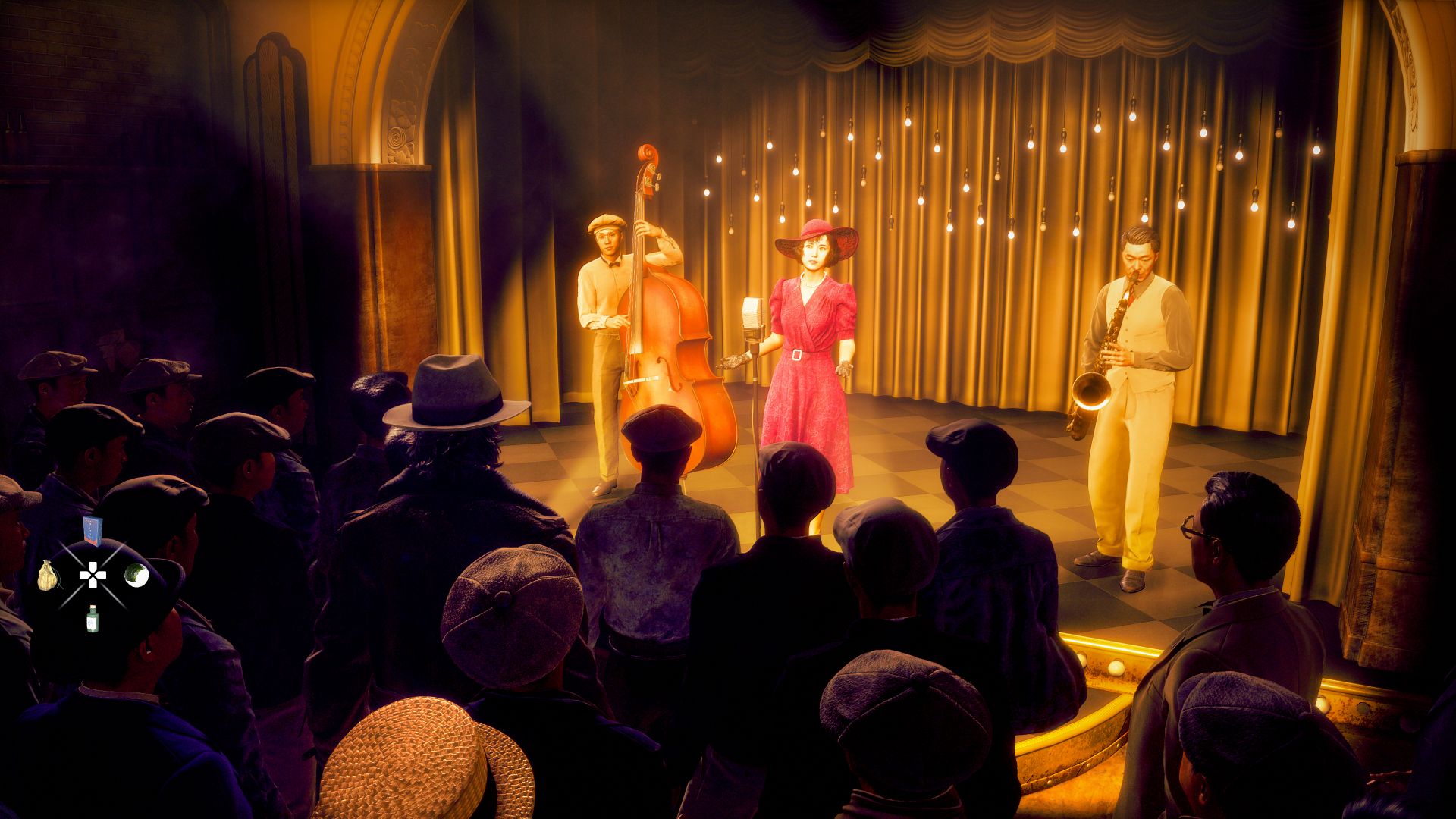
To fill a stage you gather intel and listen to NPCs, then walk out to meet the person. Singers are a special class. Takashi, played by Satoshi Fujihara, arrives through yakuza connections and becomes assistant and protégé. Suzy Day, played by Tori Kelly, arrives in the Atami years as an overseas singer trying to become big in a country whose showbiz, she says, is as cutthroat as its underworld. Keiko Shirai, Ado’s original-design character, is another name on that musical axis. Read faces on the cast page so the roster is not a blur of posters.
Xbox Presents showed a five-piece band you can arrange from a performer list. You also choose setlist, lighting color, and staging. That is producer work. Deluxe buyers get four extra skilled performers and three stage-production items plus a promotional poster, which only matter if you actually intend to run the loop. Cross-check them in the edition compare tool rather than guessing from a store bullet.

Touring is the rags-to-riches meter
Official copy frames the shows as Makoto’s rise: you take acts across Japan, not just clear a local karaoke bar. Yu Shinjo reconnects as a partner in show business during a chaotic later stretch after the two men split in Fukuoka. Their argument — belonging versus reshaping the country — will leak into what you put on stage whether the UI says so or not. The story page stays light on spoilers; this guide only needs you to treat every successful bill as both money and politics.
The Deluxe record player is an in-base soundtrack toy. The electronic camera expands photography. Neither replaces the need to scout. They are comforts for people who already like RGG’s hobbyist corners. If you are buying Standard or using Game Pass, you still get the core recording-and-staging verbs. Do not let marketing convince you that music is DLC. Music is the campaign’s second spine, described in the same breath as the combat basics.
A practical showman checklist for launch week
First, pocket sounds even when you are hunting a fight. Second, follow rumor prompts instead of ignoring chatter. Third, when a composer appears, spend the library instead of hoarding forever — new decades will restock the palette. Fourth, put your best singer in the slot the UI treats as lead; the showcase presented singers as special. Fifth, restage lighting when you move cities; 1943 Osaka glitter is not 1951 Atami salt air. Sixth, if you own Deluxe extras, add one new performer at a time so you can actually hear the difference.
For the narrative around those shows, stay in how to play and the story hub. For the men who will try to break your face between gigs, stay in how to survive. The theme song itself — performed by Snoop Dogg, Tori Kelly, Ado, and Fujihara — is the studio telling you the music is not ironic. It is the title.
Frequently asked questions
Frequently asked questions
Do I compose with a full rhythm game?
Not as shown. The broadcast described combining recorded sounds into tracks with instruments and mood, then assigning them to a bill. No Guitar Hero overlay has been presented.
Are Deluxe performers required?
No. They are extras. The scouting loop is in the base game. Deluxe adds four skilled performers and stage toys on top.
Which era is the showbiz peak?
Osaka 1943 is where Makoto and Yu’s joint show business is spotlighted. Atami 1951 brings Suzy and postwar American influence. The craft starts when Orpheus notices Makoto in 1915.
Keep reading